


Green initiatives at Højhuset
Hotel and facilities
Green Key
Green Key is an international environmental certification awarded to hotels, conference centres, and other tourism businesses that make an extra effort to care for the environment.
Højhuset is now Green Key certified – meaning the place meets a set of ambitious standards for environment, climate, and responsible operations. It’s about the everyday choices: using less energy, sorting waste, choosing organic and local produce, and thinking in green solutions from basement to rooftop.
For you as a guest, it means you can feel confident that sustainability is part of everything — from energy and water use to waste sorting, responsible purchasing, and environmentally conscious operations.
For Højhuset, it means continuously documenting and improving the green efforts — and you can be sure the place is run with care for both people and the environment.
At Højhuset, the focus is on responsible solutions — including the way water and everyday products are handled.
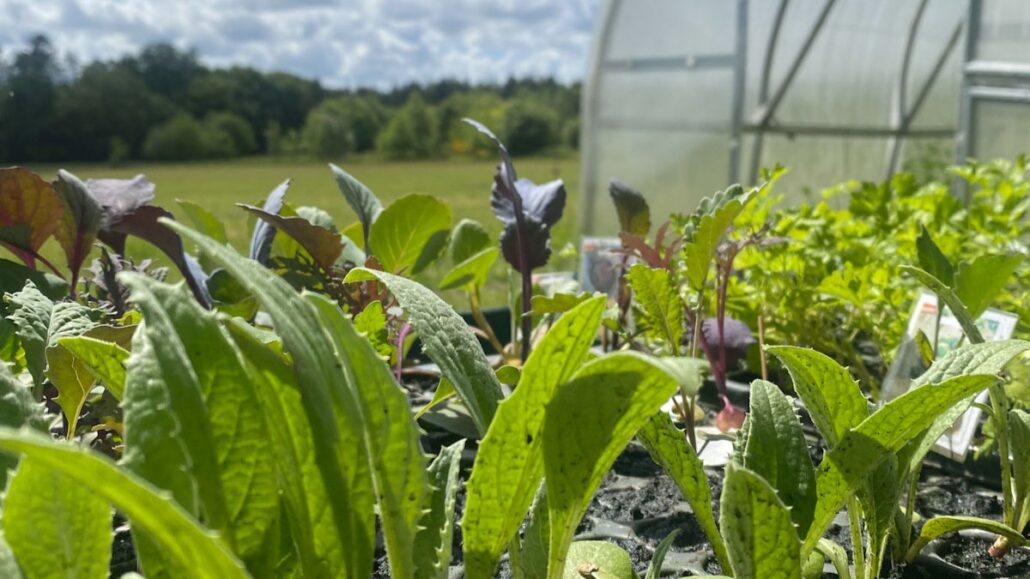
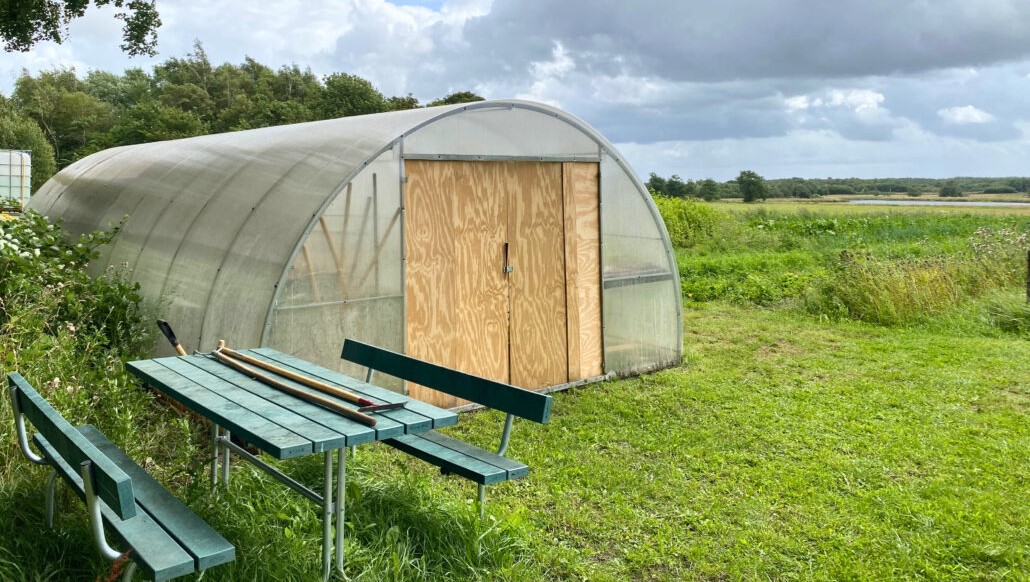
The building is fitted with modern water-saving installations that reduce consumption without affecting comfort. In the garden, rainwater is reused to irrigate the fields, greenhouses, and flowers — because growing things requires water, but it should be used with care.
Thought has also gone into what runs through the pipes and drains. That’s why there is a collaboration with Yroli, a Danish brand that produces certified skincare products made from organic and natural ingredients — with responsibility guiding everything from the contents to the packaging.
For Højhuset, sustainability is about the whole picture — and that includes something as simple as water and soap.
Food and food waste
The Silver Organic Label
With the Silver Organic Dining Label, guests are guaranteed a food experience where 60–90% of the ingredients are organic.
It’s not just about ensuring good flavour — for Højhuset, it’s just as much about environmental care, ingredient quality, and health. As a guest, that means you can enjoy your meal with a clear conscience — both in terms of quality and climate.
From farm to fork
At Højhuset, sustainability is considered in every part of the process. The farm to fork approach is about staying close to the ingredients, the landscape, and the people who cultivate it.
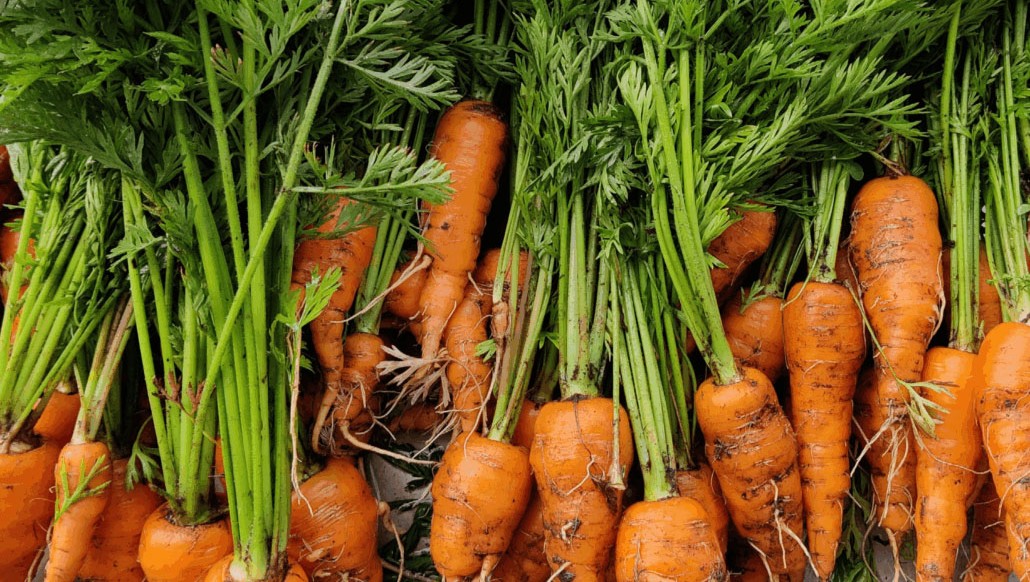
Organic and local ingredients are prioritised because they mean fewer transport kilometres, seasonal produce, and support for the growers who care for both nature and people. Many of the vegetables come straight from local fields — and quite a few even from Højhuset’s own land, gardens, and greenhouses.
The food is prepared from scratch and with respect for each ingredient. That means less waste, more flavour, and a deeper understanding of where the meal actually comes from.
When you eat here, you become part of a chain where sustainability begins in the soil — and ends in a meal that makes green sense.
Sharefood-concept
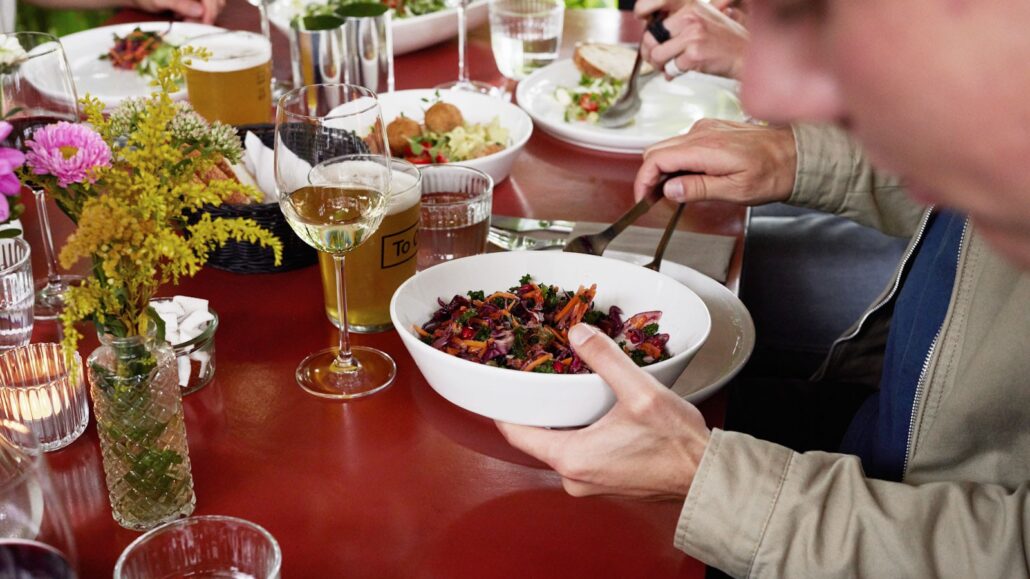
At Højhuset, shared dining is celebrated. The Sharefood concept is about togetherness and presence — but also about reducing food waste and taking responsibility for what we consume. By serving the food in dishes and bowls at the table, portions can be planned more precisely, overproduction avoided, and it becomes far easier to ensure that nothing goes to waste.
Organic, seasonal, and locally produced ingredients are used throughout — and the cooking is done with respect for both the produce and the resources behind it. It results in deeper flavour and makes a positive difference for the climate.
So when you dine here, you help support a more sustainable way of thinking about meals — and maybe even discover that the greener choice is also a very tasty one.
Farming and livestock
Agriculture and farming
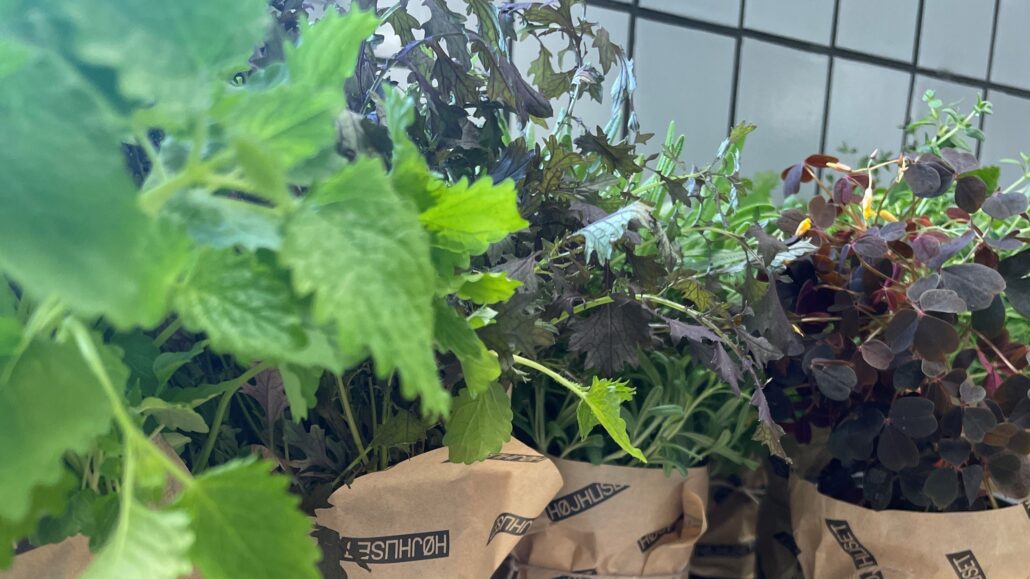
Højhuset is not only a hotel and cultural house. There is also an in-house farm, where vegetables and flowers are grown for use in the restaurant.
The house is not self-sufficient, but we get part of the way, and the quality of our produce is top-notch, and the chefs are challenged creatively when the day's harvest is delivered to the back door of the kitchen.
The organic farm supports the house’s sustainable approach, which revolves around a farm-to-fork philosophy, using good local ingredients, and avoiding overproduction — all to minimise food waste and reduce CO₂-heavy habits.
Sheep in the fields
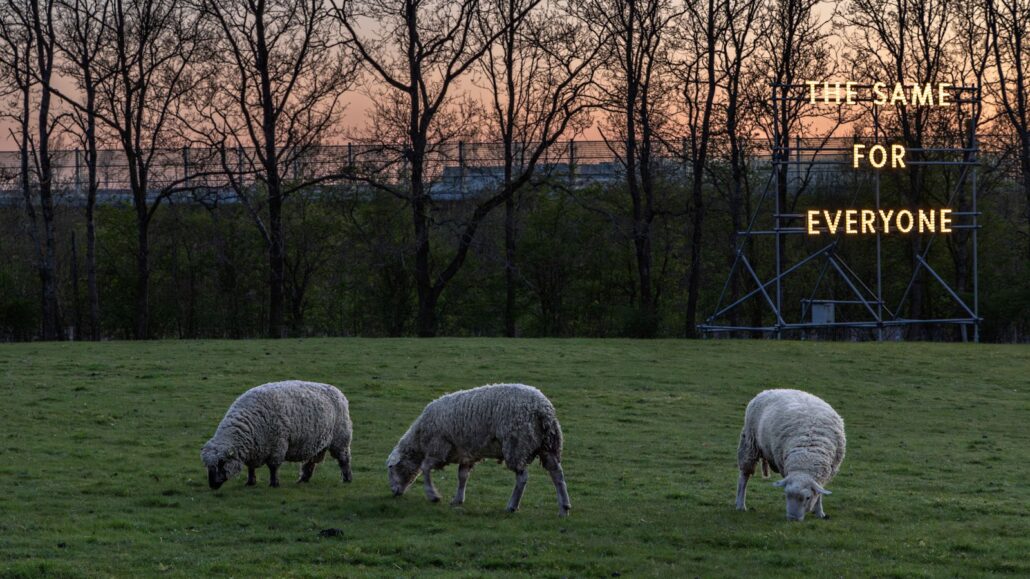
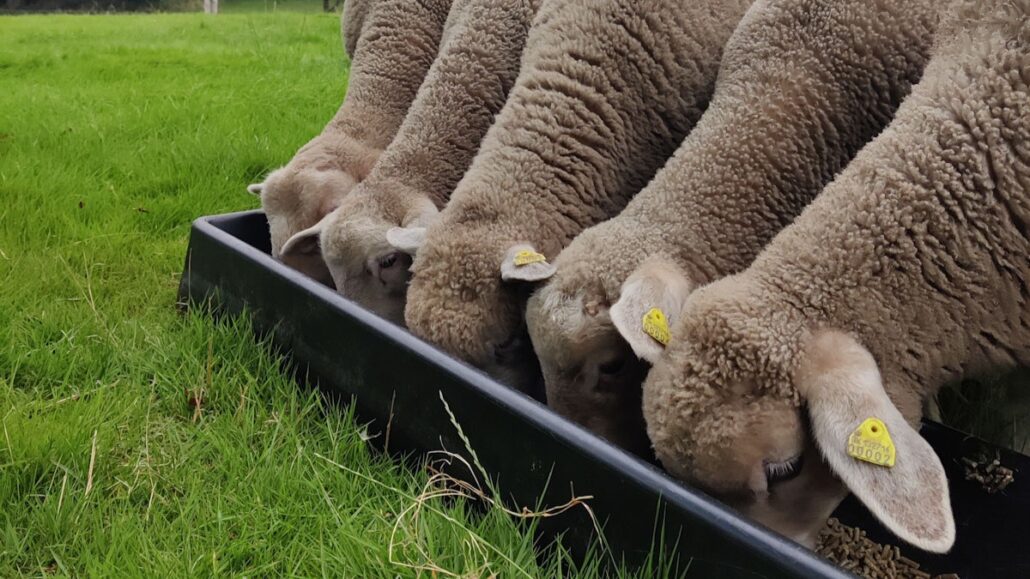
Behind Højhuset, you’ll find not only fields, greenhouses, and kitchen gardens, but also a small flock of 40 sheep grazing among the artworks — sheep that later appear on the menu in the Dining Room.
Read our case story on Bæredygtig Herning’s website
Social initiatives
Green collaboration
Højhuset’s farm is run in collaboration with Landeriet, an organic farm and a specially organised educational, living, and day programme for young people with autism or a need for a steady, predictable everyday structure. At Landeriet, learning happens through hands-on work — with soil under the nails, in the barn, and through daily responsibilities. It creates both practical development and personal wellbeing in a committed community, where everyone contributes and grows.
For Højhuset, it means that the 2,000 hectares of fields, kitchen gardens, and greenhouses are in skilled, caring hands, tended with knowledge, attention, and heart. The collaboration is something we value deeply — and there’s a real sense of pride in knowing that the ingredients grow in an environment where sustainability and human development go hand in hand.
Circulation of resources
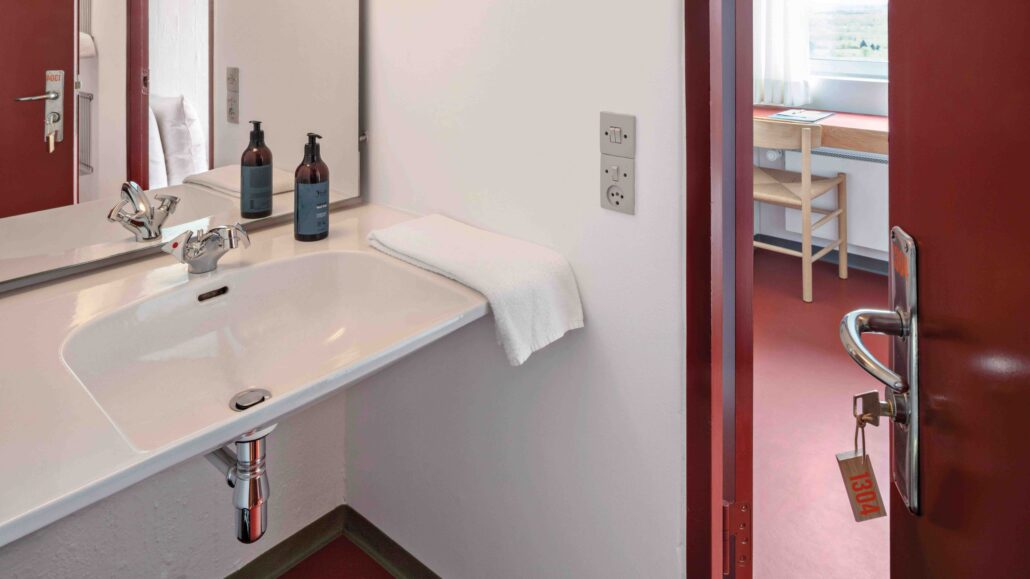
At Højhuset, the belief is to use what’s already here — again and again. The building itself is a good example: a former folk high school, fully renovated with reused materials and interior elements that still carry traces of the life once lived here. Mirrors, sinks, and lamps from that time have been preserved, dents and scratches included, because function, history, and aesthetics can easily coexist.
The same thinking guides the kitchen, the garden, and the farm. Coffee grounds are turned into soil enrichment, rainwater is collected for watering, and the next step is to use vegetable scraps as feed for the sheep in the backyard.
It’s not about perfection — but about using our heads, our hands, and what we already have, so resources gain new life and new purpose.
Green experiences
Public transport
Højhuset is easy to reach — whether you’re travelling by train, bus, bicycle, or car.
Trains and buses run regularly to and from Birk, and both stops are within a short walking distance of Højhuset. Herning Station is only a few kilometres away and offers direct connections to the area.
There are safe cycle paths all the way from both Herning city centre and the surrounding areas — and you can rent a bicycle through Højhuset during your stay.
If you arrive by car, there are convenient parking options — including charging stations for electric vehicles.
Certifications
RSV
A socio-economic company is a private company that operates a business with the purpose, through its activities and earnings, to promote social and community benefits.
Our purpose is to run a socially beneficial house that communicates cultural interests. We do this by, among other things, organizing accessible or affordable events, letting the house be a venue for a variety of cultural activities and participating in collaborations with external cultural actors on projects that promote art and culture.
The eco-label shows how much of the food and beverages purchased at an eatery are organic. The label comes in three versions: gold (90-100%), silver (60-90%), and bronze (30-60%). Højhuset has held the silver organic label since 2022.
Højhuset has had the silver organic label since 2022.